Lidia KrólJuly 14, 20253 min
Why is football more than just a game?
knowledge#management#football
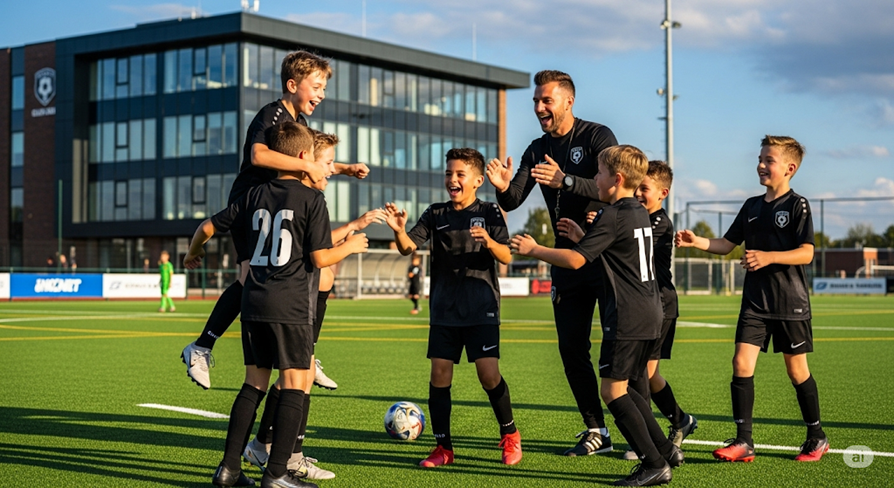
Many people see football as a sport, a physical discipline, or sometimes – just entertainment. But for those who live football – coaches, players, parents, fans, or club officials – it is much more. It’s a lifestyle. It’s a value system. It’s a community.
In this article, we explain why football is not just about goals, league tables, and running on the pitch. It is a powerful tool for building character, relationships, and local identity.
1. Education through sport
A child who joins a football club doesn’t only learn dribbling or first touch. They learn cooperation, responsibility, and discipline. They learn how to lose without giving up, and how to celebrate victory without arrogance.Football becomes a tool to shape young people – not just future athletes, but also better students, friends, and citizens.
2. A community that lives together
Local football clubs are not just sports structures – they are centers of community life. This is where parents meet in the stands, where the coach becomes a mentor, and where fans become family.By organizing training sessions, matches, camps, and tournaments – we build more than just a team. We build bonds, loyalty, and identity. Children identify with the colors, while adults feel they contribute to something important.
3. More than results
Yes – victories bring joy. But it’s not the score that builds the club’s history. It is the consistency of actions, the relationships, and the joint work on developing every person – the player, the coach, and the parent.That’s why football should be seen as a process – full of emotions, learning, and shared moments – not just as a goal. After all, we remember not the score of a given match, but the emotions that came with it.
4. How modern tools can support this
Today, managing a club is not just about a notebook, a phone, and Excel. It’s also about technology that brings people closer together – enabling faster communication, better planning, and more engagement in the life of the organization.Applications supporting everyday club life – from communication, through training, to statistics – become connectors between people, not just tools. When they work well, they are invisible, but their effects are felt in the team’s atmosphere.
Football is more than 90 minutes of play. It’s emotions, values, and people. It’s lessons you don’t learn at school and bonds you can’t buy. By running a club – even the smallest one – we influence something much bigger than just the result of a match.
And that’s why it’s worth focusing not only on training, but also on relationships, communication, and consistency in action. Because football is life – and it’s worth organizing it well.
Manage your sports club like a pro
Try Team Mate Pro for free and see how easily you can manage your sports club.
Start for free